What #ShiftThePower means to us

What #ShiftThePower means to us

From December 5 to 7, representatives of our team participated in the #ShiftThePower summit in Bogotá, Colombia. During the summit, reflecting on the experiences and information shared, we wrote a letter to the #ShiftThePower community and the international audience about what #ShiftThePower means to us.

We are the National Network for the Development of Local Philanthropy, working to change the influence of non-governmental organizations on society in Ukraine by collaborating with international donors to advocate for the process of localization. We aim to ensure that global resources serve local needs and align with local realities and priorities.

For Ukraine, #ShiftThePower means survival. We are currently dependent on international aid—humanitarian, economic, and military. #ShiftThePower, for us, is a manifestation of solidarity, taking into account our context and respect for our fight for independence and democratic values. Of course, it is also about local resources. Over the past two years, Ukrainians have raised $2.3 billion in cash solely to support our military. However, we live in a media world where any news can be fabricated with money. Russia spends a great deal of money on some public figures, who have influence and authority, but are not from local communities, to sway larger donors. Therefore, shifting the power means empowering and investing in the voices of the local people.

During one of the sessions, we wrote a slogan about the strategy for safe communities. The slogan of our group was connected to the theme of inclusive listening. When peacebuilding takes place, communities must be heard. Peace should not be violent. The community should own its peace.

In another session, we discussed decolonization. Each of us has our own context. We want to share Ukraine’s context. Since 2014, about 7% of our country’s territory has been occupied by Russia. In 2014, Russia and Ukraine signed the Minsk agreements to halt the active phase of the war. In 2022, Russia launched a full-scale invasion of Ukraine. Currently, 18% of our territory is occupied. Around 20 cities and countless villages have been completely destroyed. Occupiers kill civilians just because they are Ukrainians. The occupiers rape women and abduct children. They prevent humanitarian aid from reaching people in occupied territories. NGOs have no access to these areas and cannot support activists who manage to help. The occupiers force the indigenous population, especially Crimean Tatars, to leave their homes.

You may think that Russia’s colonization of Ukraine is a matter of just the past few years. In reality, this process has been ongoing for centuries, ever since Russia absorbed most of Ukraine in the late 17th century. Since 1922, when Russia re-conquered briefly independent Ukraine and included it into the USSR, Russia has been killing our intellectuals, destroying our culture and religion, and murdering people, as it did during the Holodomor in 1932-33. Then, in 1991, we formally gained independence. But was it truly independent? Partially. Our national assets were stolen or destroyed; we were forced to give up nuclear weapons under the illusionary protection of the Budapest Memorandum. We remained economically dependent on Russia. But as former Soviet countries began to develop, Russia drifted far from what the Soviet Union was in its final decades. The Russians decided to inherit Soviet-style dictatorship and restore their empire. Today, Russia is an autocratic country that is trying to convince the world that Ukraine does not exist. For us, colonialism is not just about creating economic dependence, exploitation, and extraction. It is also about conquest and subjugation, which Ukraine is now enduring. Colonialism is also about power that convinces the world that bad things are good, and evil is justified.

At the #ShiftThePower summit, we all learned that we face the same issues in our different contexts, such as powerless local communities, forced neutrality, politically correct wording, and pressure for half-baked peace. We see the same patterns and can learn much from each other. There are over 30 wars and conflicts in the world today. We must not forget about any of them. For us Ukrainians, this is our modern, very acute struggle for liberation.

But our request to all is: let’s begin with inclusive listening to one another. We must be in solidarity with each other and be sure that we are fighting for one goal—to improve the lives of our local communities. We must share our grief, but not compare it. By going through similar experiences, we can forge closer bonds through empathy, which will fuel the strength in our communities to truly #ShiftThePower.

Поділитись
Article
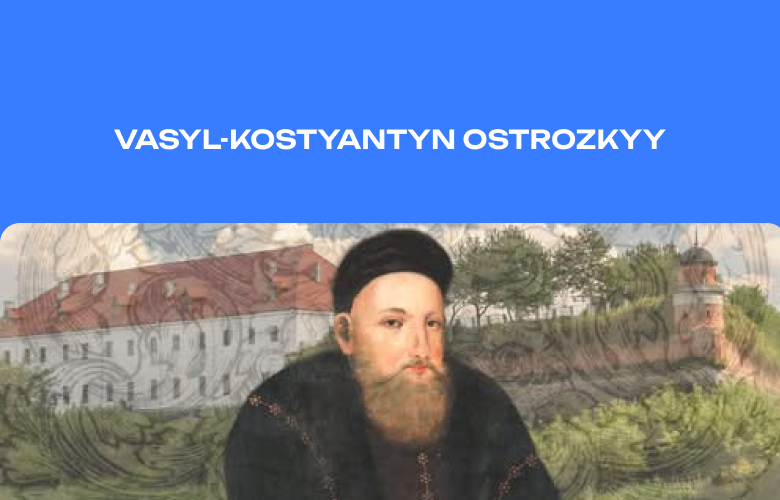
Who was Vasyl-Kostiantyn Ostrozkyi?

Who was Vasyl-Kostiantyn Ostrozkyi?

Article
Olena Pchilka: A Philanthropist of Ukrainian Culture

Olena Pchilka: A Philanthropist of Ukrainian Culture

Article
What Is Philanthropy and How Does It Differ from Charity

What Is Philanthropy and How Does It Differ from Charity

Article
The Symyrenko Family: Ukrainian Entrepreneurs and Philanthropists Who Shaped Ukrainian Culture

The Symyrenko Family: Ukrainian Entrepreneurs and Philanthropists Who Shaped Ukrainian Culture

Article
Light for pre-frontline Kharkiv

Light for pre-frontline Kharkiv

Article
A community foundation from Kramatorsk on an international conference in Africa

A community foundation from Kramatorsk on an international conference in Africa

Article
‘I thought it would be an inspection, but it turned out to be a partnership’

‘I thought it would be an inspection, but it turned out to be a partnership’

PDF file
More Than a Report:  The Work of Ukraine’s Community Foundations 2022-2025

More Than a Report: The Work of Ukraine’s Community Foundations 2022-2025

PDF file
Ukrainian Philanthropy 2025: Who gives, How and Why

Ukrainian Philanthropy 2025: Who gives, How and Why

PDF file
Handbook after volunteering in community foundations

Handbook after volunteering in community foundations

PDF file
Partnership across borders: how the diaspora and NGOs are shaping new models of cooperation

Partnership across borders: how the diaspora and NGOs are shaping new models of cooperation

Article
The Principle of Neutrality: Its Origins and Views of International Organizations

The Principle of Neutrality: Its Origins and Views of International Organizations

Article
Ancestors of Ukrainian Philanthropy!

Ancestors of Ukrainian Philanthropy!

PDF file
The role of Ukraine’s community foundations in a time of war

The role of Ukraine’s community foundations in a time of war

Article
Why is it important to donate regularly?

Why is it important to donate regularly?

Article
How can Ukrainian literature be useful to civil society activists?

How can Ukrainian literature be useful to civil society activists?

Article
Ukrainian Youth Developing Their Communities and Contributing to Victory

Ukrainian Youth Developing Their Communities and Contributing to Victory

Article
Numbers or meanings? How the logic of measuring results in donor relations is changing

Numbers or meanings? How the logic of measuring results in donor relations is changing

Article
To be effective or neutral?

To be effective or neutral?

Open letter
War is not a conflict. An open letter

War is not a conflict. An open letter

Article
Science that would not have happened without philanthropists

Science that would not have happened without philanthropists

Article
What experience can the Ukrainian NGO sector learn from the international community?

What experience can the Ukrainian NGO sector learn from the international community?

Article
The story of the creation of The Ukraine Local Pooled Fund

The story of the creation of The Ukraine Local Pooled Fund

Article
“What Unites Us with the Youth is the Opportunity to Create Social Change in Our Community”

“What Unites Us with the Youth is the Opportunity to Create Social Change in Our Community”

Article
Data as a Tool for Change: How Monitoring and Evaluation Strengthen Organizations and Their Projects

Data as a Tool for Change: How Monitoring and Evaluation Strengthen Organizations and Their Projects

PDF file
Research: “Philanthropy in Ukraine: who gives, how and why”

Research: “Philanthropy in Ukraine: who gives, how and why”

Open letter
The open letter “Solidarity in action”

The open letter “Solidarity in action”

Article
​Ukrainian local organizations are 15.5% more cost-effective than international NGOs – the study

​Ukrainian local organizations are 15.5% more cost-effective than international NGOs – the study

Article
Recommendations for creating organizational development programs for local NGOs

Recommendations for creating organizational development programs for local NGOs

Article
What #ShiftThePower means to us

What #ShiftThePower means to us

Article
Darya Rybalchenko: We Need to Agree on Principles — How We See Our Future Ukraine.

Darya Rybalchenko: We Need to Agree on Principles — How We See Our Future Ukraine.

Article
“Donors Are Real People. We Are Also Tired of Bureaucracy”

“Donors Are Real People. We Are Also Tired of Bureaucracy”

Article
How to preserve the donor culture?

How to preserve the donor culture?

Article
Why do organisations need networks and partnerships?

Why do organisations need networks and partnerships?

Article
The history of charity in Ukraine.

The history of charity in Ukraine.

Article
The power of local organisations

The power of local organisations

Article
Peace is not only the absence of war, but also peace in the community and society!

Peace is not only the absence of war, but also peace in the community and society!

Article
Youth development within the framework of the Youth Initiative Banks project

Youth development within the framework of the Youth Initiative Banks project

Article
How community foundations from around the world support Ukraine

How community foundations from around the world support Ukraine

Article
Experience of cooperation with ShelterBox

Experience of cooperation with ShelterBox

Article
The Impact of Localization of International Aid

The Impact of Localization of International Aid

Article
How to fill out a project application to pass?

How to fill out a project application to pass?

Article
Were There Volunteers During World War II?

Were There Volunteers During World War II?

Article
Localization of resources as a means to accelerate the development of civil society in Ukraine

Localization of resources as a means to accelerate the development of civil society in Ukraine

Article
Results of the round table for Ukrainian public organizations

Results of the round table for Ukrainian public organizations

Article
How to Choose a Ukrainian Organization to Support

How to Choose a Ukrainian Organization to Support

Open letter
​ If not now, when?

​ If not now, when?