Article

The Advantages of Networking, How It Helps During Crises and Even War, Why Everyone Wins from Partnerships, and the Specifics and Differences of the National Network of Local Philanthropy Development Model
– A Conversation with the Head of the National Network of Local Philanthropy Development, Darya Rybalchenko, on “Gromadskiy Prostir.”
National Network of Local Philanthropy Development “Philanthropists” unites more than a dozen non-governmental organizations in Ukraine, working under the “community foundation” model. They engage and redistribute charitable financial and material resources to meet the urgent needs of their communities. The Network’s main goal is to spread the best philanthropy practices and create new forms of civic participation. During the full-scale war, the network remains active, helping where it’s needed most. This topic will be discussed in our conversation.
Interestingly, we were almost an hour late to meet Darya because of an air raid alert, but despite everything, the conversation took place — these are the realities we live and work in…
Darya, you just returned from New York, where you were studying philanthropy…
Yes, it wasn’t exactly studying, but rather research at the City University of New York. They have a Center for people who have completed their studies but continue to conduct research. There is a department called “Philanthropy and Civil Society.” They have been recruiting cohorts of students every year since 1989. They offer various lectures, and each student conducts research. I was working on how to improve the work of our organization. Our model emerged abroad at the beginning of the 20th century, and similar organizations have existed abroad for many more years. So, there’s much more experience there. For me, it was valuable to study the experiences of different countries, see how organizations working under the same model as ours operate, and take something new and practical for our strategy and development.
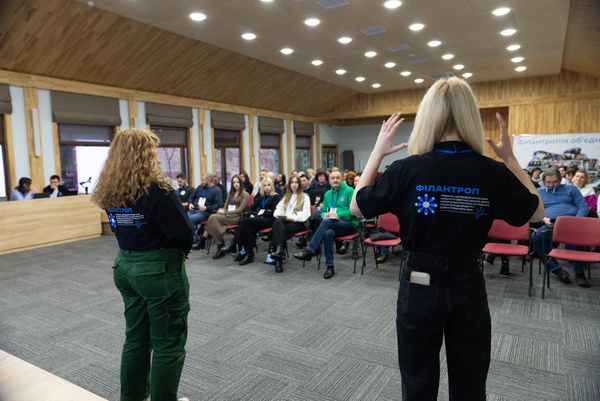
Annual Network Conference
How does your organizational model differ from Ukrainian ones?
We work as an association of community foundations.
To explain this better, we first need to define what a community foundation is…
A community foundation is a charitable organization that operates at the local level and has several areas of focus. This includes asset building. In Europe and the USA, this is often an endowment — funds that accumulate a certain amount of resources and then provide grants from the interest earned. The goal is to prepare communities so that there are always resources to meet the needs of the community. Of our foundations, only one currently has such an endowment, and it’s not very large — it only covers the administrative costs of the organization. For all other projects, they attract additional grants and funding.
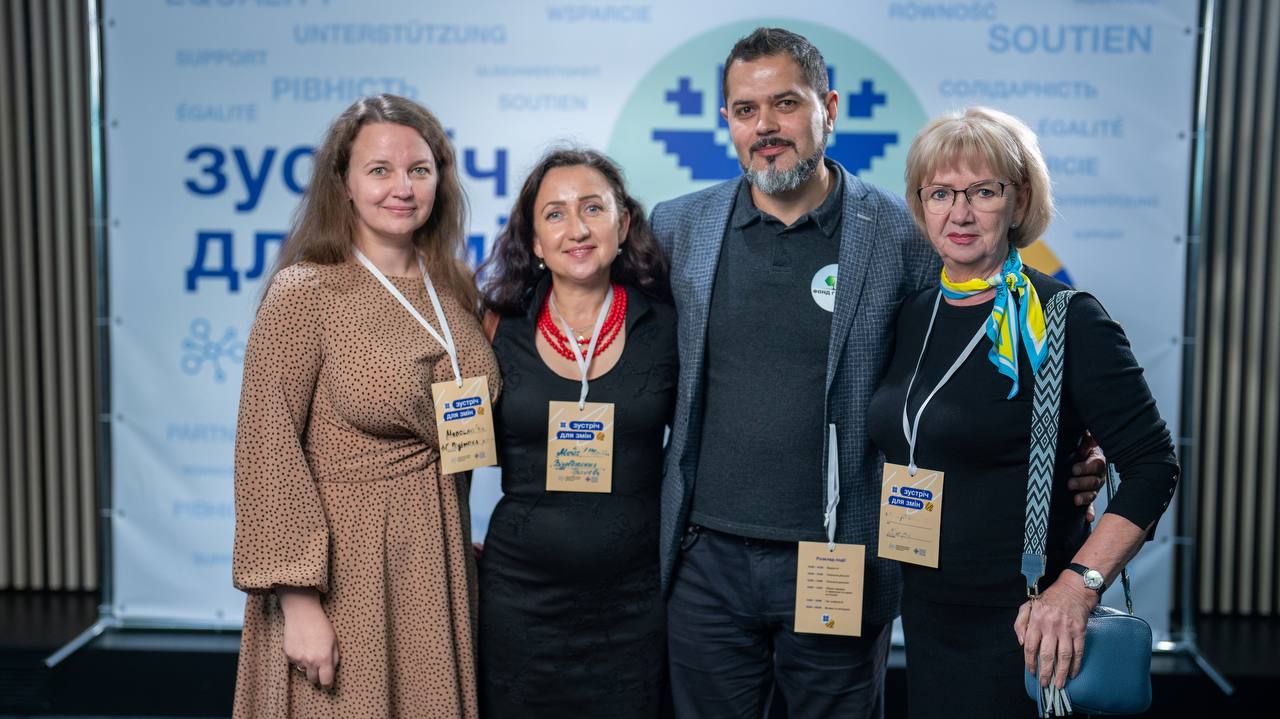
Participants of the Network
Another area of focus for community foundations is building connections within the community. They play a leadership role by uniting civil society, business, and local government to create a better life in the community. And the next point is grants. A community foundation is a grant-making local organization. Ideally, these are local resources collected to assess community needs and distribute funds to address those needs.
I can give you a clear example. We have a community foundation in the city of Kherson, called “Zakhyst.” In 2021, they had a program focused on security. They conducted a survey to find out what concerned people in the community regarding safety, and they determined that there was a major concern due to the proximity to Crimea, the occupied territory. The community requested a map of bomb shelters. Six months before the full-scale invasion, the community foundation created this map with local resources, supplemented by international partners. Since they were local, they could conduct research, understand the community’s needs, and take action.
Did the map prove useful?
Absolutely. Due to the occupation, many people lost access to information, and there was no connection to many resources. However, the research revealed that most bomb shelters at that time were not suitable for use. Some of the shelters were repaired, and some were added to the list. But at that moment, it was clear that we were not prepared for an invasion.
What is the advantage of being a network?
As the saying goes, “One in the field is not a warrior.” We, as a network, provide a service that enhances the work of our local community foundations. We help them build their capacity. We promote peer-to-peer learning, where they can learn from one another. Additionally, we support them with international experience and help organize trips abroad to visit other foundations, meet, and learn. We inform them about international lectures and experiences. We are also involved in various international associations, from which we bring information to our foundations. We have internal grants for organizational development, which only network participants have access to. They can use these funds for speakers, trips, and various needs.
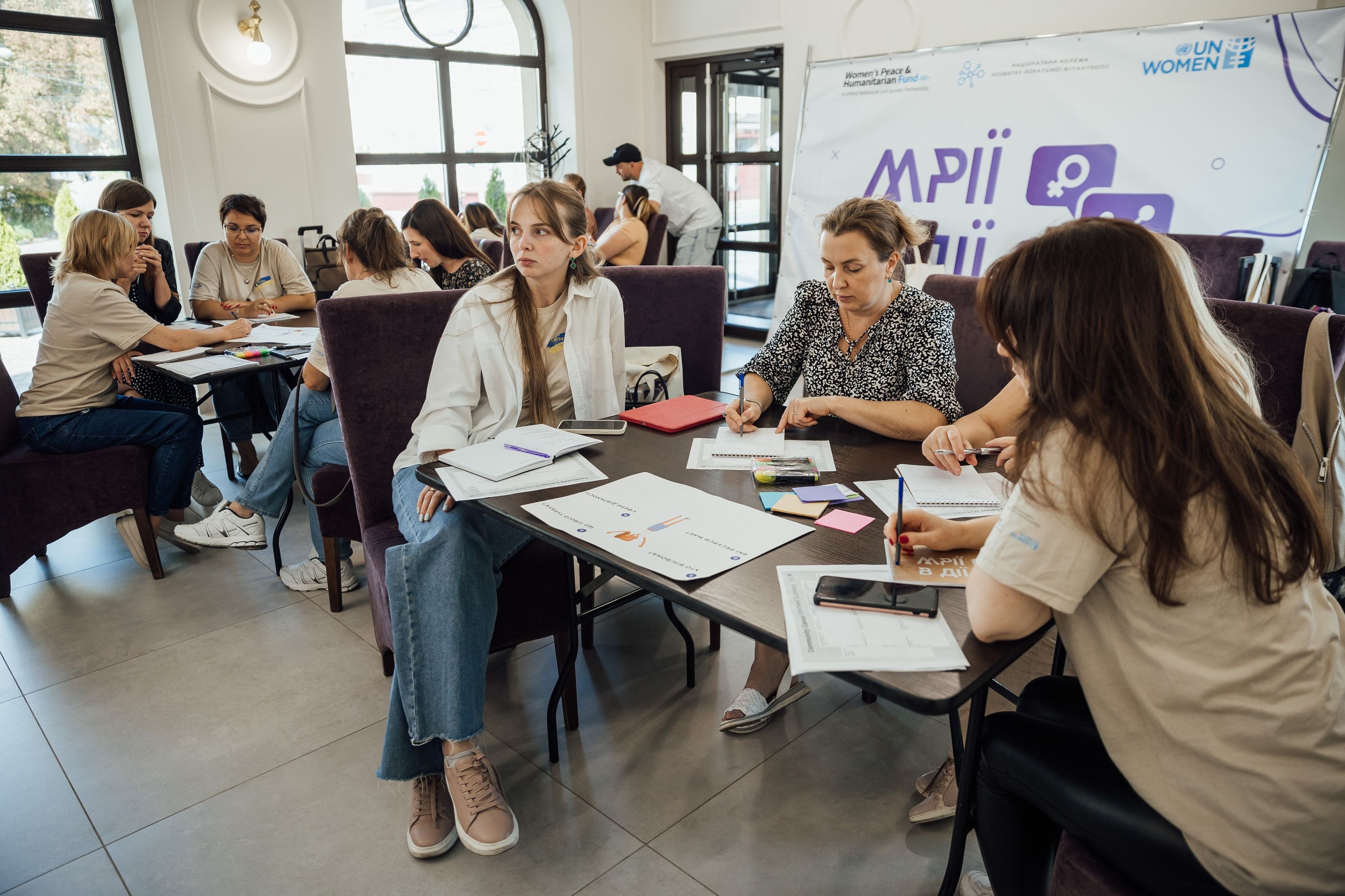
Next, there’s communication. We try to highlight the work of our foundations and popularize them both within Ukraine and internationally.
We also focus on advocacy. Together with the foundations, we identify our advocacy priorities and work on them bit by bit.
Among our tasks is the development of local philanthropy. The network promotes social entrepreneurship and builds connections between local entrepreneurs, engaged individuals, and our foundations.
Lastly, funding. We help connect them with donors. We also engage in re-granting for social projects. Sometimes, donors find it easier to allocate larger amounts of funding to one organization, which then redistributes the funds to smaller projects. We have acted as re-granters for our foundations and provided funding this way.
How many organizations are currently in the Network?
There are 15 organizations today.
From which regions of Ukraine?
From all over Ukraine. We have participants from Kharkiv, Mykolaiv, Kherson, Kyiv region, Lviv region, Vinnytsia, and more.
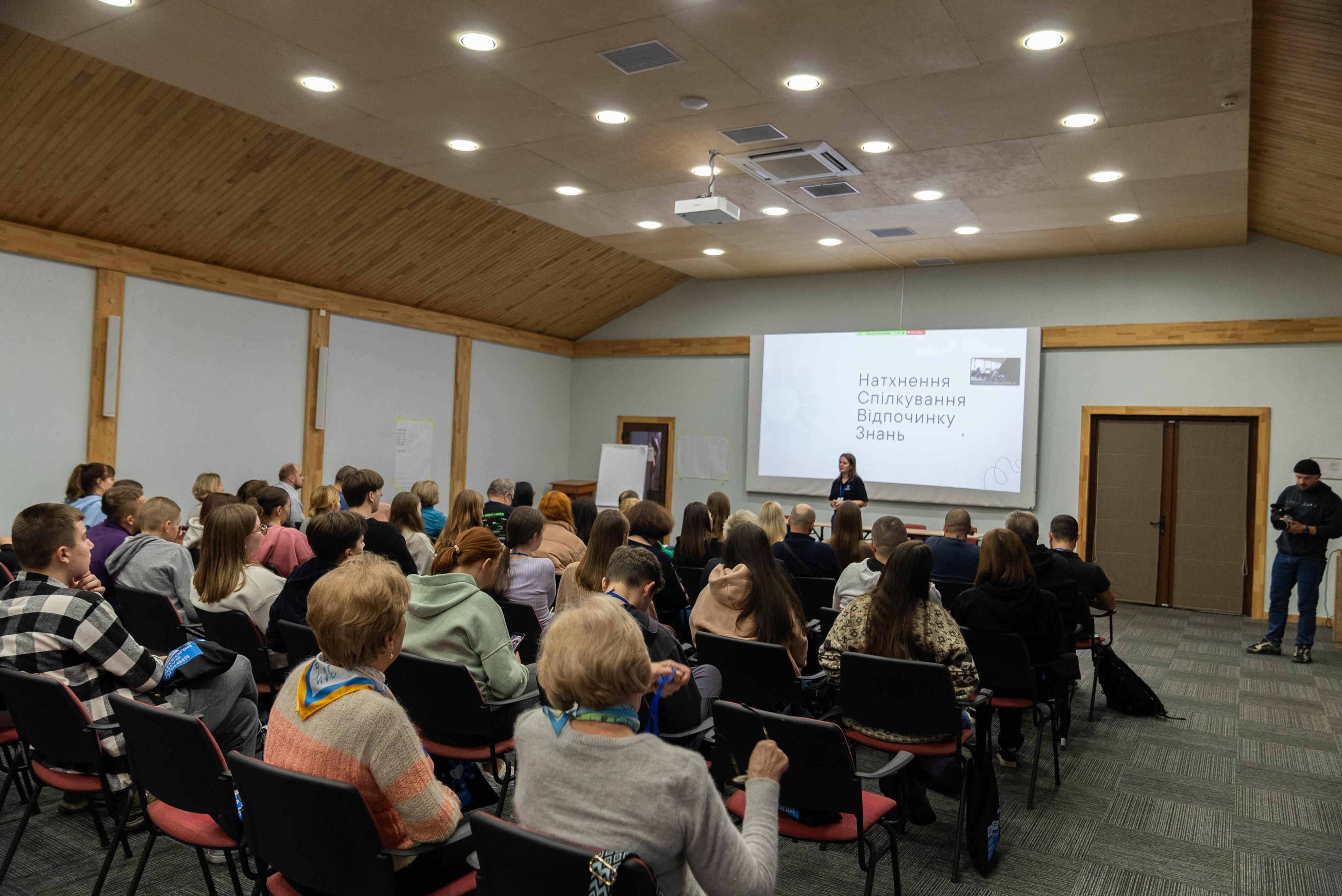
Annual Network Conference
How has the full-scale invasion affected your activities?
Probably, it has strengthened them. When the invasion began, everyone was confused. Being a network became our advantage. We started building these initial connections. We began calling and asking who had needs and who had resources, uniting, first and foremost, between the foundations, exchanging resources and information. For example, we have a foundation in Berezan. Dimerka was occupied, and Berezan was on the front line. There were restrictions on access and delivery of goods. And our community foundation “Ridnya” from Stryi, Lviv region, sent them humanitarian aid. Similarly, the Vinnytsia foundation from Bar was delivering aid to Kherson region when it was still accessible. I remember Bar receiving a large amount of animal food — there was a great demand for it at the beginning of the war.
You are currently working on six projects. What areas are you focused on?
Our areas of focus include humanitarian response, localization, youth engagement, entrepreneurship development, and agriculture, particularly related to food security.
The Network’s Team
What is your added value, and how does your activity stand out?
We don’t work with everything and everywhere just because funding is available.
This is an interesting question. I am planning to conduct research to highlight this with certain statistics and figures. But today, we are very local: we understand the needs of our community, and that’s our main focus. We don’t work with everything and where the money is. We focus on the needs of our community, on the needs of the collective, and this is not always about large cities. It’s about places like Berezan, Stryi, Bar… Yes, we have foundations in Kharkiv and Zhytomyr, which are bigger, but they are all focused on local needs.
Is it about targeted assistance?
Not always. Yes, sometimes it is targeted. For example, we know an elderly woman, Aunt Lyuba, who is in a wheelchair and cannot come to receive aid. But it’s also about the fact that the “Podilska Community” foundation from Vinnytsia, when a business center was hit last year, began providing grants to local entrepreneurs who had lost offices and equipment. They also supported healthcare workers with grants for their emotional well-being and projects aimed at supporting medical staff. It’s about understanding the moods of the community and recognizing which group of the community is in need of help. It’s about how we can strengthen certain aspects with our mini-resources, our skills in communicating with international donors, our abilities to work transparently and honestly with local resources, and our knowledge of which businesses will be interested in providing resources, such as storage for humanitarian aid. That’s what we’re talking about.